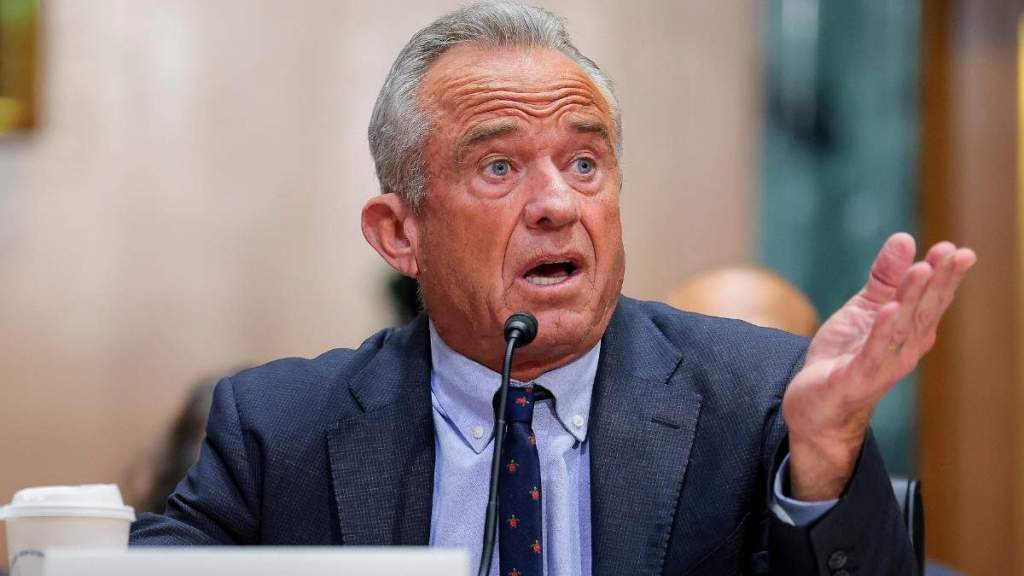
RFK Jr. has addressed concerns over the male fertility crisis at a recent White House event. Speaking with reporters, the Health and Human Services (HHS) Secretary referred to statistics and compared the sperm count of men from the 70s to present-day teenage boys.
RFK Jr. makes bold comment on male fertility issue
During a maternal healthcare event at the White House on Monday, Robert F. Kennedy Jr. weighed in on the U.S.’ declining birth rate, calling it an “existential crisis.” The HHS Secretary cited environmental issues that have impacted the reproductive health of both men and women.
“It’s a threat not only to our economy,” Kennedy stated, but also “to our national security.” He added, “It’s a direct threat to our social security trust fund, to the Medicare trust fund.” The HHS Secretary went on to note the potential impact of obesity, endocrine disruptors, pesticides, and what he described as “toxic soup that our young women are walking around in,” on fertility.
Kennedy then compared the sperm count of men from the 1970s to that of teenage boys of today. “The fertility crisis for women began in 2007, for men in 1970. Men had twice the sperm count as our teenagers do today. This is an existential crisis for our country.”
The U.S. Secretary has often cited these statistics in the past, from a 2022 review examining global trends in sperm count. The review, which was published in the academic journal Human Reproductive Update, does not, however, specifically mention teenagers.
Speaking with Fox News’ Jesse Watters in April 2025, Kennedy stated, “We have fertility rates that are just spiraling.” He added, “A teenager today, an American teenager, has less testosterone than a 68-year-old man.”
Most recently, the Donald Trump administration proposed a new rule that would allow employers to “offer meaningful fertility benefits” to their employees. The rule was proposed by the U.S. departments of Labor, Health and Human Services, and Treasury as part of Trump’s Executive Order, “Expanding Access to In Vitro Fertilization.”
Originally reported by Namrata Ghosh on Mandatory.