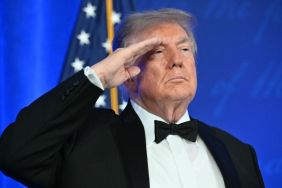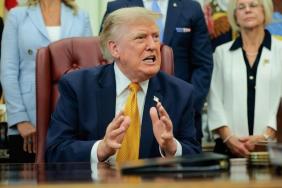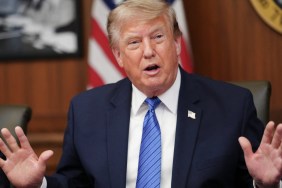
Democratic Rep. Susie Lee of Nevada unleashed an expletive-laden social media attack on President Donald Trump after he made history by attending a Supreme Court hearing on birthright citizenship. The post, which was later deleted, still circulated online through screenshots, drawing reactions across political circles.
Susie Lee calls out Donald Trump over Supreme Court visit
The situation began after reports confirmed that Donald Trump would attend oral arguments at the Supreme Court. It was an unusual move that made him the first sitting president to do so. The hearing focused on his executive order aimed at restricting birthright citizenship, a policy that directly challenges the 14th Amendment.
Responding to the news early Wednesday morning, Susie Lee wrote on X, “So f*cking f*cked up. I’ll pray they f*ck him to his face,” before adding, “Sorry, I say f*ck a lot these days.” She later deleted the post, but not before it gained traction online.
Addressing the backlash later that day, Lee stood by the sentiment behind her words, even as she acknowledged the reaction. “Clearly my language touched a nerve,” she wrote. “My nerve was touched by the attacks on our Constitution and its separation of powers. I took an oath to protect and defend it,” Lee added.
Donald Trump, meanwhile, spent about an hour inside the courtroom, observing as justices questioned his administration’s push to limit birthright citizenship to children of U.S. citizens and permanent residents. He left shortly after the opposing arguments began.
The executive order at the center of the case argues that citizenship should not automatically apply to everyone born in the United States. However, the 14th Amendment states that “all persons” born in the country are citizens, a point that multiple lower courts have already upheld in rulings against the order. After leaving the hearing, Trump continued to defend his stance publicly, calling birthright citizenship “one of the many Great Scams of our time” in a social media post.
The Supreme Court is expected to issue its final ruling later this summer, a decision that could have far-reaching constitutional implications.
Originally reported by Devanshi Basu for Mandatory.