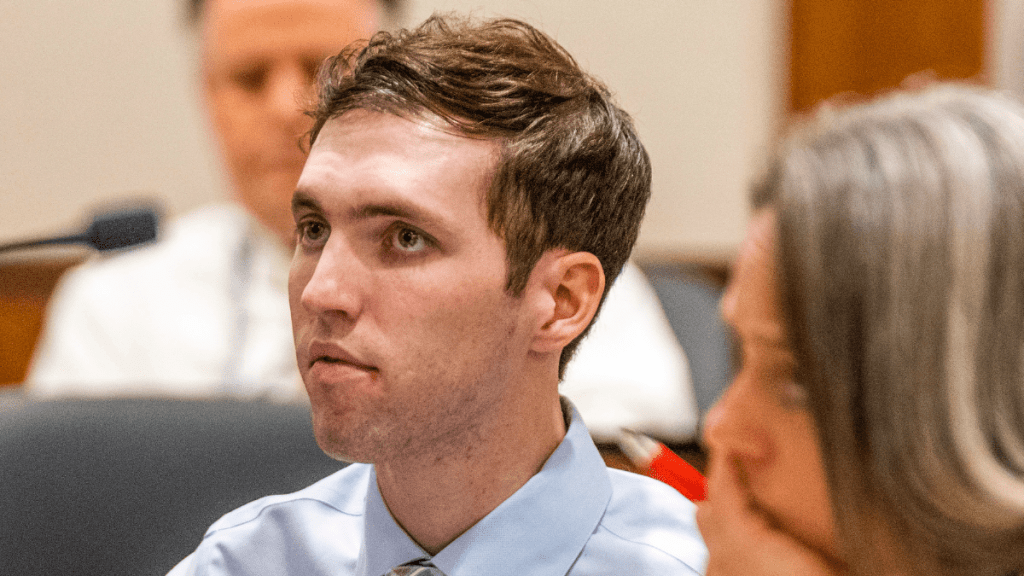
Tyler Robinson, who is accused of fatally shooting right-wing campaigner Charlie Kirk at Utah Valley University, allegedly cried afterward and said he regretted his actions. The 23-year-old reportedly said he “wishes he hadn’t done it.”
Testimony describes Tyler Robinson allegedly expressing remorse during conversations with his former roommate after Charlie Kirk’s death
Robinson faces several charges, including aggravated murder, in connection with Kirk’s death on Sept. 10, 2025. Prosecutors intend to seek the death penalty if Robinson is convicted.
The preliminary hearing is being held this week in Provo, Utah. According to Le Monde, the testimony comes as proceedings enter their fourth day. The court is determining whether there is enough evidence to send Robinson to trial.
During the July 9 court proceedings, prosecutors played a video of authorities interviewing Lance Twiggs, Robinson’s roommate and romantic partner. Kirk’s family, including his widow, Erika Kirk, attended the hearing. In the clip, Twiggs recalled that Robinson returned to their St. George, Utah, apartment after the shooting. He said Robinson appeared visibly nervous.
Twiggs said in the interview, as quoted by the BBC, “I just asked him in person if what he said was true the night before, and he said it was. He started crying a little bit and said he wishes he hadn’t done it and then kept going around and just doing stuff, I think to keep himself busy or distracted or something.”
According to testimony, Robinson told his roommate that he planned to turn himself in. Utah State Bureau of Investigation Agent Brian Davis also testified on July 8 that the defendant arrived at the Washington County Sheriff’s Office at approximately 9 p.m. on Sept. 11 with his parents and a family friend.
The defense team, which filed its motion on May 31, is seeking to keep dozens of exhibits under seal. Thus, citing concerns that media attention could affect Robinson’s right to a fair trial. Robinson’s attorney, Staci Visser, said, as quoted by NewsNation, “That’s the only way we see that we can protect our client’s right to a fair trial and avoid evidence getting out that potentially is going to be challenged in the future and may not ultimately be used or admissible at trial.”
TELL US – WHAT ARE YOUR THOUGHTS ON THIS CASE?