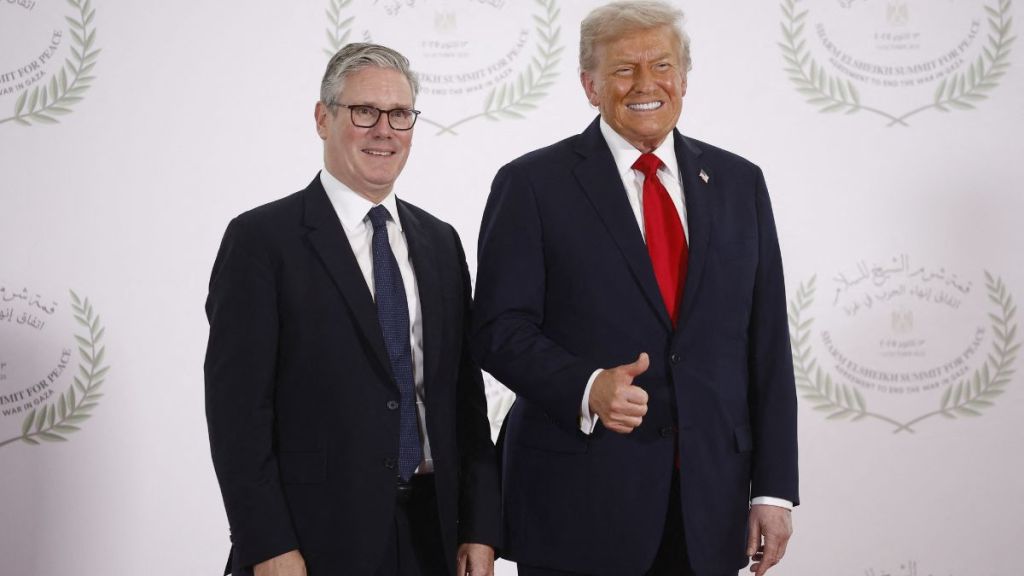
Prime Minister Keir Starmer has given a firm and unequivocal response to Donald Trump‘s recent warning, telling the House of Commons that Britain will not be drawn into military action against Iran. This is the latest low point in transatlantic tensions as the U.S. president continues to express frustration over the U.K.’s refusal to join offensive operations in the Middle East.
Keir Starmer is ‘not going to yield’ to Donald Trump’s warning
Speaking during Prime Minister’s Questions, Sir Keir Starmer stated, “I’m not going to change my mind, I’m not going to yield, it is not in our national interest to join this war and we will not do so.” His remarks came directly after Donald Trump used an interview to claim that when America sought British assistance, “they were not there.”
The prime minister acknowledged sustained pressure from Washington since the U.S.-Israel war on Iran began in late February. “My position on Iran has been clear from the start, we’re not going to get dragged into this war,” Starmer said. He added, “That pressure included what happened last night,” referencing Trump’s pointed media comments (via BBC).
Meanwhile, Trump had suggested economic consequences could follow Britain’s military non-participation. Referring to the tariff agreement struck last May, the POTUS warned on Sky News, it “can always be changed.” When questioned about the relationship, Trump responded dismissively, “With who?” The president elaborated that relations had “been better, but it’s sad.”
Despite Trump’s remarks, Downing Street maintains that the bilateral partnership remains robust. A spokesperson for Starmer emphasized that the relationship “exists on multiple levels” spanning “trade, diplomacy, national security, culture, and beyond.”
Furthermore, Chancellor Rachel Reeves has voiced her own frustrations regarding the war. She described it to The Mirror as a “mistake” and expressed anger that the U.S. “went into this war without a clear exit plan.” The International Monetary Fund has already downgraded U.K. growth forecasts to 0.8%, citing Britain’s vulnerability as a net energy importer amid instability around the Strait of Hormuz.
Originally reported by Devanshi Basu on Mandatory.