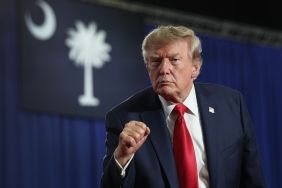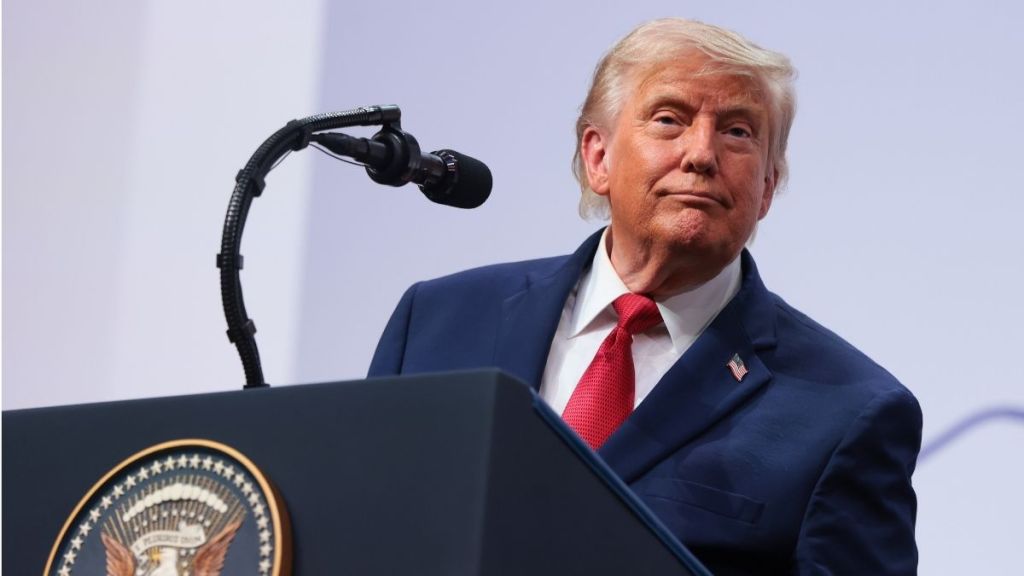
President Donald Trump interrupted a quantum technology event in the Oval Office with a bizarre personal question. He asked a Nobel Prize-winning physicist a question about his late uncle. This is the latest addition to Trump mentioning his uncle in unexpected places.
Donald Trump asks Nobel physicist if he knew his uncle
The president had summoned scientists, cabinet members, and tech leaders to the Oval Office to sign two executive orders on quantum research. Standing among the dignitaries was Professor John Martinis, who shared the 2025 Nobel Prize in Physics for research that traces back to a paper published four decades ago.
Before the strange detour, Trump had already turned to Martinis and asked whether he should reveal how long ago the foundational research took place. The professor answered, “About 40 years ago.” Trump called that “pretty good” before admitting he had been waiting for a Nobel Peace Prize himself. He then complained that “they don’t think eight wars is enough” and claimed, “nobody’s ever done one.”
Minutes later, the president returned to Martinis with an entirely unexpected query. “Did you know of my uncle at all?” Donald Trump asked. The professor twisted to his right, scanning for whom the president might actually be addressing. Defense Secretary Pete Hegseth, stationed beside him, motioned back toward Trump to signal the question was directed at Martinis.
“No, no,” the physicist answered. Trump pressed again. “You didn’t?” Martinis offered a gentle “No, sorry” as others in the room laughed. Furthermore, Martinis pointed out that UC Berkeley, where he studied and conducted research, and MIT, where Donald Trump’s uncle held a professorship, are on opposite coasts.
The president has spent years amplifying the legacy of his uncle, John Trump. John did teach at MIT, but his field was electrical engineering, not physics. He died in 1985, the same year a young Martinis co-authored the paper at Berkeley that, decades later, would earn him science’s highest honor.
Originally reported by Devanshi Basu for Mandatory.