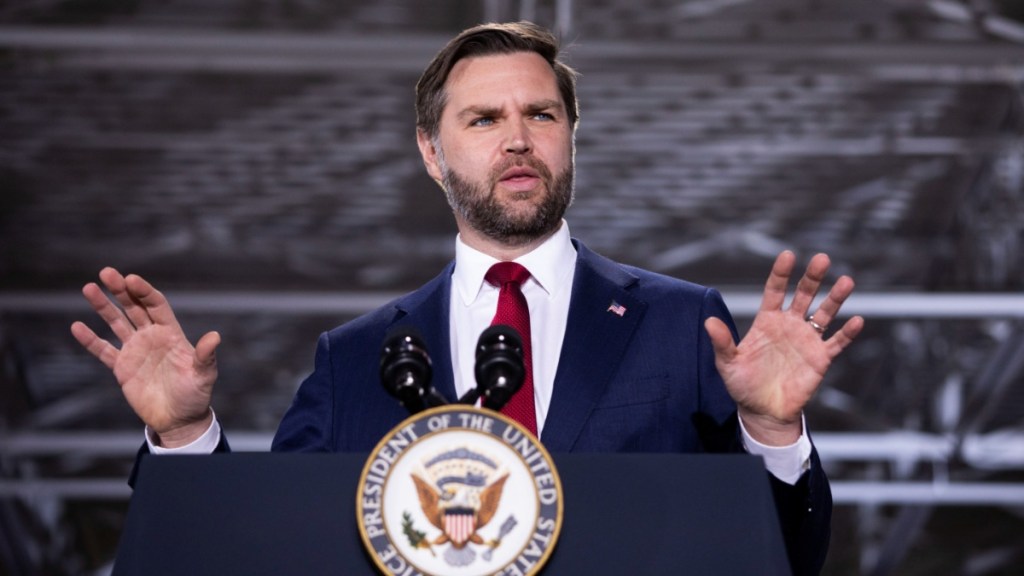
Developments around potential U.S.–Iran talks have taken a new turn, with reports suggesting Tehran may be shifting its preferred point of contact. The situation comes amid ongoing conflict and stalled diplomatic efforts, with questions emerging over who could lead any future negotiations.
Iran says they want to negotiate with JD Vance, claims report
Iran has indicated it will only engage in negotiations with Vice President J.D. Vance, rejecting talks with President Donald Trump’s current emissaries, according to a report in The Guardian.
Iranian officials have refused further engagement with Special Envoy Steve Witkoff and Jared Kushner. They had led nuclear negotiations before the conflict. A diplomatic source said, “With the previous negotiating team, there’s no chance.”
The report states Iran views earlier negotiations as deceptive, believing they were used to trick Iran into thinking they were negotiating in good faith. The same source said, “The Iranian side regards the request for negotiations as another round of deception for the US-Israeli regime to find out a loophole to aggravate the strikes again.”
Iran has indicated that “If the negotiations are going to have any outcome, JD Vance should join,” adding, “With Witkoff and Kushner, nothing will come out of it.” Vance has previously expressed skepticism toward U.S. military intervention in the Middle East.
Separately, Pakistani Prime Minister Shehbaz Sharif said his country is ready to “facilitate meaningful and conclusive talks” between the U.S. and Iran in Islamabad. An official read-out said both sides “agreed on the urgent need for de-escalation, dialogue and diplomacy.” Officials have not finalized a venue, though they are considering Egypt, Turkey, and Qatar.
The conflict began after U.S. strikes on Iran more than three weeks ago. It has resulted in over 2,000 reported deaths, including 13 U.S. service members. Trump warned that he would “obliterate” Iran’s power plants if Iran did not reopen the Strait of Hormuz within 48 hours, but later said the U.S. had engaged in “good and productive conversations.” Iran denied this, calling it an attempt to #escape his recent threat on “Iran’s power infrastructure.”
Originally reported by Vritti Johar on Mandatory.com.