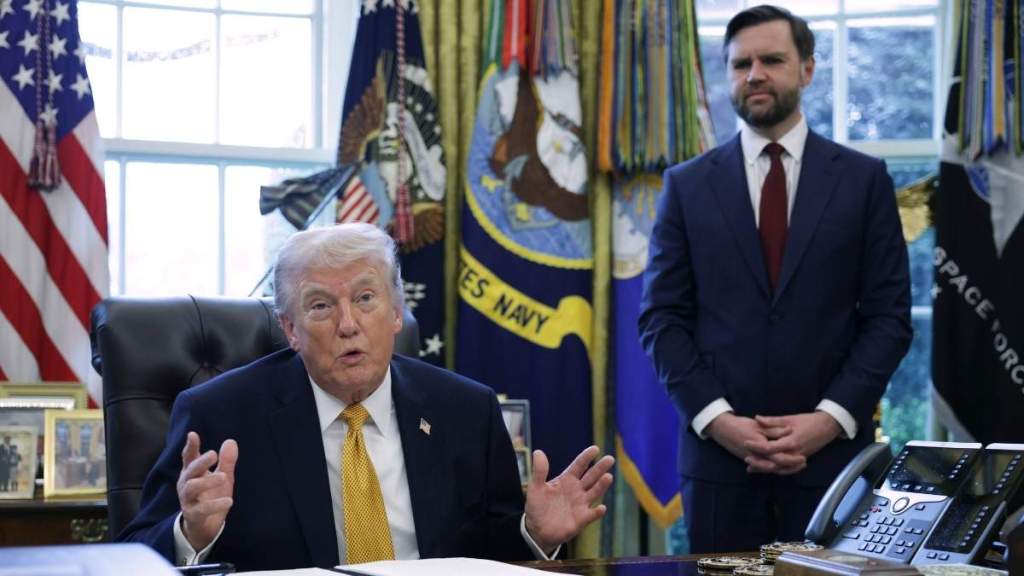
The US Vice President JD Vance dismissed concerns over President Donald Trump’s stock trading spree on Tuesday, May 19. New filings show hundreds of millions in transactions over three months.
JD Vance dismisses Donald Trump’s stock trading spree
The vice president fielded questions at a White House briefing after financial disclosures revealed more than 3,700 trades executed during the first quarter of 2026. The documents have raised eyebrows over the separation between Trump’s public office and private wealth.
Vance rejected any suggestion that Donald Trump personally directs the stock trading spree. “The president doesn’t sit at the Oval Office on his computer on his, like, Robinhood account, buying and selling stocks,” he said. “That’s absurd. He has independent wealth advisors who manage his money…is a wealthy person. He has had success in business.”
The filings include holdings in companies the president has promoted publicly. One notable example involves Palantir, the artificial intelligence contractor. The disclosures record purchases of Palantir shares in March. Weeks later, as the stock endured its markedly weekly decline in more than a year, Trump posted on Truth Social: “Palantir Technologies (PLTR) has proven to have great war fighting capabilities and equipment. Just ask our enemies!!! President DJT.”
A reporter noted that securities Trump “has talked up at events” and in social media posts appear in the disclosures. Some of those posts even included stock ticker symbols. When the journalist added that polling shows Americans increasingly view the president as corrupt, Vance responded, “This is a hell of a question.” The VP insisted no conflict exists. “He’s not making these stock trades himself,” Vance said, accusing the reporter of implying otherwise.
White House spokesman Davis Ingle told CNBC on Friday that Trump’s assets “are in a trust managed by his children,” stating plainly, “there are no conflicts of interest.” A Trump Organization spokesperson elaborated that trades happen through automated systems and that family members “receive no advance notice of trading activity and provide no input regarding investment decisions or portfolio management of any kind.”
Originally reported by Devanshi Basu on Mandatory.